
Novedad: Liturgia de los bosques
Darío Jaramillo Agudelo, 2026

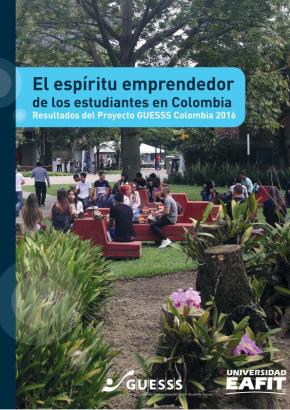
El emprendimiento se ha convertido en una de las prioridades en las estrategias de los gobiernos y las distintas instituciones que buscan el desarrollo económico y social de las regiones y los países. Desde esta perspectiva, las universidades, como entornos de investigación, centros de educación y espacios privilegiados para el encuentro social, se han convertido en actores importantes en la promoción del emprendimiento en su entorno. Ello fundamenta las grandes expectativas existentes respecto a los estudiantes universitarios como creadores de empresas de impacto con alto valor agregado, como ocurre con las de base tecnológica (Morales Alonso, Pablo Lerchundi & Núez Del Río, 2016).
Ajzen, I. (1991). The theory of planned behavior. Organizational Behavior and Human Decision Processes, 50(2), 179-211.
Ajzen, I. (2002). Perceived behavioral control, self-efficacy, locus of control, and thetheory of planned behavior. Journal of Applied Social Psychology, 32(1), 665-683.
Armitage, C. J. & Conner, M. (1999). The theory of planned behaviour: Assessment ofpredictive validity and “perceived control”. British Journal of Social Psychology, 38(1), 35-54.
Armitage, C. J. & Conner, M. (2001). Efficacy of the theory of planned behaviour: A metaanalytic review. British Journal of Social Psychology, 40(4), 471-499.
Bae, T. J.; Qian, S.; Miao, C. & Fiet, J. O. (2014). The relationship between entre-preneurship education and entrepreneurial intentions: A meta-analytic review.Entrepreneurship Theory and Practice, 38(2), 217-254.
Bagozzi, R. P.; Baumgartner, J. & Yi, Y. (1989). An investigation into the role of intentionsas mediators of the attitude-behavior relationship. Journal of Economic Psychology, 10(1), 35-62.
Fishbein, M. & Ajzen, I. (1975). Belief, Attitude, Intention, and Behavior: An Introduction to Theory and Research. Massachusetts: Addison-Wesley.
Frey, U.; Halter, F. & Zellweger, T. (2005). Nachfolger gesucht! Empirische Erkenntnisse und Handlungsempfehlungen für die Schweiz. Zürich: PriceWaterhouseCoppers.
Halter, F.; Schrettle, T. & Baldegger, R. (2009). Erfolgreiche Unternehmensnachfolge: Studie mit KMU-Unternehmern zu emotionalen und finanziellen Aspekten. Zürich:Credit Suisse.
Iglesias Sánchez, P. P.; Jambrino Maldonado, C.; Peñafiel, A. & Kokash, H. (2016).Impact of entrepreneurship programmes on university students. Education + Training, 58(2), 209-228. http://doi.org/10.1108/ET-01-2015-0004.
Kolvereid, L. & Isaksen, E. (2006). New business start-up and subsequent entry intoselfemployment. Journal of Business Venturing, 21(6), 866-885.
Krueger, N. F. Jr. & Brazeal, D. V. (1994). Entrepreneurial potential and potential entrepreneurs. Entrepreneurship Theory and Practice, 18(3), 91-105.
Krueger, N.; Reilly, M. D. & Carsrud, A. L. (2000). Competing models of entrepreneurial intentions . Journal of Business Venturing, 15(5-6), 411-432.
Laspita, S.; Breugst, N.; Heblich, S. & Patzelt, H. (2012). Intergenerational transmissionof entrepreneurial intentions. Journal of Business Venturing, 27(1), 414-435.
Levenson, H. (1973). Multidimensional Locus of Control in Psychiatric Patients. Journal of Consulting and Clinical Psychology, 41(3), 397-404.
Lima, E.; Lopes, R. M.; Nassif, V. & Silva, D. (2011). Intenções e Atividades Empreendedoras dos Estudantes Universitários: Relatório do Estudo guesss Brasil 2011 . São Paulo: uninove .
Lima, E.; Nassif, V. M.; Lopes, R. M. & Silva, D. (2014). Educação Superior em Empreendedorismo e Intenções Empreendedoras dos Estudantes: Relatório do Estudo guesss Brasil 2013-2014. São Paulo: Grupo apoe .
Liñán, F.; Rodriguez Cohard, J. C. & Rueda Cantuche, J. M. (2011). Factors affectingentrepreneurial intention levels: A role for education. International Entrepreneurship and Management Journal, 7(2), 195-218. http://doi.org/10.1007/s11365-010-0154-z.
Liñán, F. & Chen, Y. W. (2009). Development and cross-cultural application of a specificinstrument to measure entrepreneurial intentions. Entrepreneurship Theory and Practice, 33(3), 593-617.
Liñán, F. & Fayolle, A. (2015). A systematic literature review on entrepreneurialintentions: Citation, thematic analyses, and research agenda. International Entrepreneurship and Management Journal, 11(4), 907-933. http://doi.org/10.1007/s11365-015-0356-5.
Luethje, C. & Franke, N. (2004). Entrepreneurial intentions of business students: abenchmarking study. International Journal of Innovation and Technology, 1(3), 269-288.
Martins, I.; Gómez, E. & Vaillant, Y. (2014). El efecto del comportamiento exportadorsobre el compromiso del propietario-gerente con la innovación en Colombia: inter-pretaciones bajo el enfoque de aprendizaje. Cuadernos de Administración, 27(49), 21 .http://doi.org/10.11144/Javeriana.cao27-49.ecec.
Monsen, E. & Urbig, D. (2009). Perceptions of efficacy, control and risk: a theo-ry of mixed control. En A. Carsrud & M. Brännback (eds.), Understanding the Entrepreneurial Mind (259-281). New York: Springer.
Morales Alonso, G.; Pablo Lerchundi, I. & Núez Del Río, M. C. (2016). Entrepreneurialintention of engineering students and associated influence of contextual factors.International Journal of Social Psychology, 31(1), 75-90. http://doi.org/10.1080/02134748 .2015 .1101314.
Pereira, F . et al. (2012) . Colombia Global Entrepreneuroship Monitor. Bogotá: EdicionesSello Javeriano. https://www.icesi.edu.co/cdee/images/informes/colombia/REPORT_GEM_Colombia_2011.pdf. ISBN: 978-958-8347-70-7
Rotter, J. B. (1966). Generalized expectancies for internal versus external control ofreinforcement . Psychological Monographs, 80(1), 1-28.
Schlaegel, C. & Koenig, M. (2014). Determinants of entrepreneurial intent: A meta-analytictest and integration of competing models . Entrepreneurship Theory and Practice, 38(2), 291-332.
Shook, C. L.; Priem, R. L & McGee, J. E. (2003). Venture creation and the enterprisingindividual: A review and synthesis. Journal of Management, 29(3), 379-399.
Sieger, P.; Fueglistaller, U. & Zellweger, T. (2011). Entrepreneurial Intentions and Activities of Students across the World. International Report of the guesss Project 2011. St. Gallen:Swiss Research Institute of Small Business and Entrepreneurship at the Universityof St.
Gallen.Sieger, P.; Fueglistaller, U. & Zellweger, T. (2014). Student Entrepreneurship Across the Globe: A Look at Intentions and Activities. St. Gallen: Swiss Research Institute of SmallBusiness and Entrepreneurship at the University of St. Gallen.
Sieger, P., Fueglistaller, U. & Zellweger, T. (2016). Student Entrepreneurship 2016: Insights From 50 Countries. St. Gallen: Swiss Research Institute of Small Business andEntrepreneurship at the University of St.
Gallen.Sieger, P. & Monsen, E. (2015). Founder, academic, or employee? A nuanced study ofcareer choice intentions. Journal of Small Business Management, 53, 30-57.
Vanevenhoven, J. (2013). Advances and challenges in entrepreneurship education.Journal of Small Business Management, 51(3), 466-470.
Zellweger, T.; Sieger, P. & Halter, F. (2011). Should I stay or should I go? Career choi-ce intentions of students with family business background. Journal of Business Venturing, 26(5), 521-536

Darío Jaramillo Agudelo, 2026

Vigilada Mineducación